
Kale
Kale is a leafy green related to wild mustard and cabbage. It was first cultivated in the Mediterranean region and has many different varieties. At Ave 33 Farm we predominantly grow and sell Lacinato, curly, or Red Russian. Kale is a staple product in many European countries, especially Germany. In the United States, kale did not become a common leafy green until the 1990s.
Storage
Kale is best stored in your refrigerator with paper towels wrapped around the leaves, then placed in a zip-lock bag or wrapped in cling wrap.
Usage
Make sure you submerge your kale in water before eating, as the ridges and bumps can hide a lot of dirt. Both the stems and leaves are edible, however the stems are bitter and tough, and often discarded. If you plan to eat your kale raw, massage its leaves with an edible oil like olive oil to aid in digestion and taste. You can either fold your kale in half down the center ridge and cut the leaves off the ridge, or cut through the center ridge horizontally.
Recipes
Street corn kale salad (ingredients also from farm stand: avocado, cilantro, limes, garlic, onions)
Tomato Pasta with Kale (ingredients also from farm stand: tomatoes, fennel, lemon)
Pesto Kale Quiche (ingredients also from farm stand: egg, onion, basil, garlic, lemon)
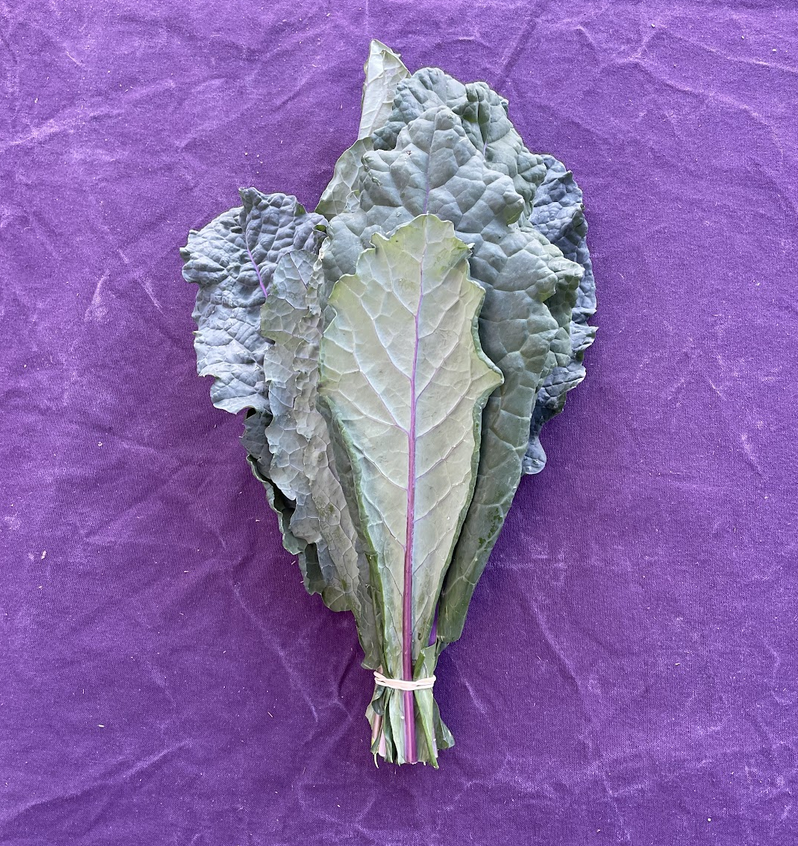
A bunch of Russian kale from our farm stand.
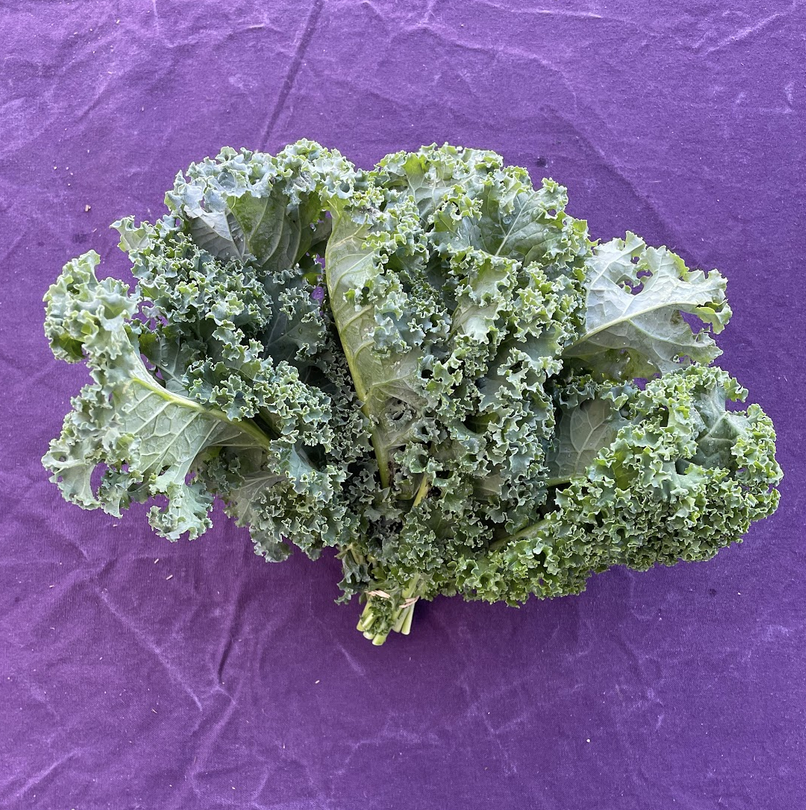
A bunch of curly kale from our farm stand.