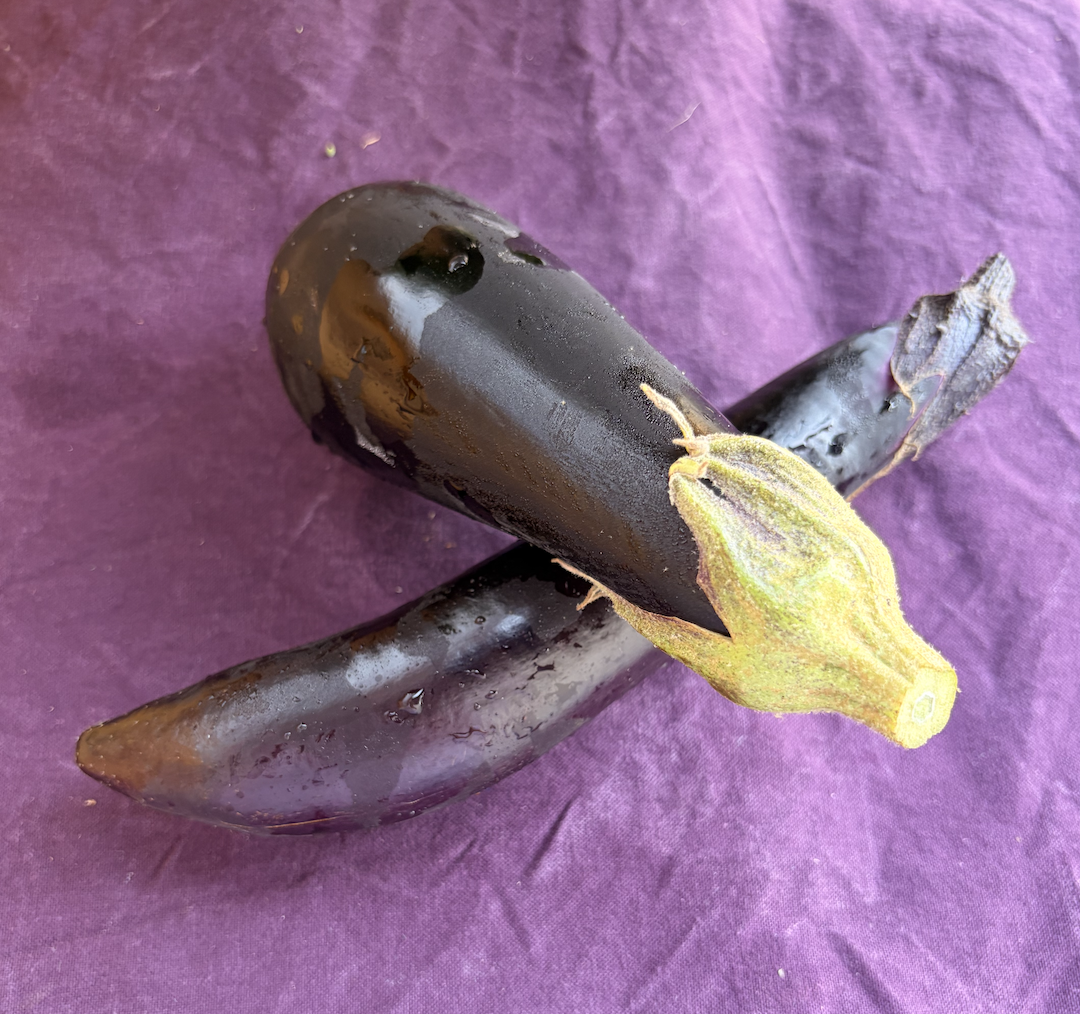
Eggplant
Eggplant is in the nightshade family Solanaceae, grown worldwide for its edible fruit, and typically used as a vegetable in cooking. Eggplant is featured heavily in Mediterranean, Middle Eastern, and Asian cuisines.
Storage
Keep your eggplants in a cool, dark spot—an unsunny corner of your kitchen, or even a garage or basement, if they aren’t prone to pests. Wrap each eggplant in a paper towel or inside a paper bag with the top left open. That way the fruits can still breathe, and the paper will absorb any excess moisture that could cause them to unduly soften. Store eggplant away from fruits like apples, bananas, and tomatoes, which give off large amounts of ethylene that can hasten the ripening of nearby fruits and vegetables.
Usage
Eggplant can be steamed, stir-fried, pan fried, deep fried, barbecued, roasted, stewed, curried, or pickled. Many eggplant dishes are sauces made by mashing the cooked fruit. It can be stuffed, and is often used as a meat substitute.
Tips: 1) Salting sliced eggplant and letting it sit draws out extra water and stops it from soaking up too much oil. 2) Most eggplant skins are thin and safe to eat once cooked. 3) Eggplant needs enough heat and oil to turn silky instead of rubbery
Recipes
Babaganoush (ingredients also from farm stand: lemon, garlic, pomegranate)
Zaalouk (ingredients also from farm stand: lemon, garlic, tomatoes)
Sweet Corn Polenta with Eggplant Sauce (ingredients also from farm stand: tomatoes, corn, oregano)
Mexican Eggplant Parmesan (ingredients also from farm stand: egg, tomato, jalapeno, onion, cilantro)